
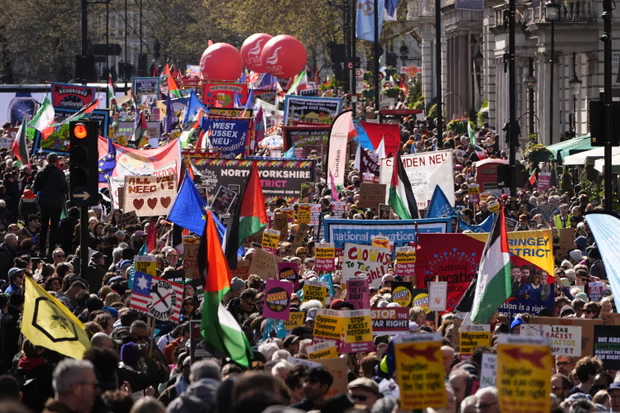
On Saturday, March 28, 2026, London witnessed what organizers have described as the largest multicultural demonstration in British history. Under the banner of the “Together Alliance,” a massive coalition of over 500 organizations—including trade unions, charities, and faith groups—marched through the heart of the capital to reject far-right politics and promote national unity.
The March: A Sea of Unity
The demonstration began at midday at Park Lane, with a crowd so vast that when the front of the march reached the rally point at Whitehall, the tail end was still at the starting point.
- Attendance Figures: Organizers estimated a turnout of 500,000 people, comfortably outnumbering the “Unite the Kingdom” rally held by Tommy Robinson in September 2025 (which drew roughly 110,000–150,000). The Metropolitan Police provided a more conservative estimate of 50,000, while acknowledging the difficulty of counting such a dispersed crowd.
- Celebrity Support: The event saw a massive turnout from the arts and entertainment world. Performers and speakers included Billy Bragg, Self Esteem, Jessie Ware, UB40, and Paloma Faith. High-profile actors like Lenny Henry, Steve Coogan, and Christopher Eccleston also marched in solidarity.
- Political Voices: Prominent figures such as Diane Abbott, Green Party leader Zack Polanski, and Greater Manchester Mayor Andy Burnham addressed the crowds, calling for “hope over fear” and a rejection of divisive rhetoric.
Key Themes: Beyond Anti-Racism
While the core message was anti-fascist and anti-racist, the “Together Alliance” served as an umbrella for several interconnected movements:
- Anti-War Sentiment: Many placards addressed the ongoing conflict in Iran, with protesters chanting, “Not our war” and “Unity, not bombs.”
- Climate Justice: Groups like “Cut the Ties to Fossil Fuels” marched to highlight the link between “Big Oil” funding and far-right political parties.
- Pro-Palestine Solidarity: A separate pro-Palestine march merged with the main Together Alliance route, contributing to the “multicultural” scale of the day.
Frequently Asked Questions (F&Q)
- Who organized the London protest? The Together Alliance, a coalition of 500+ groups including Stand Up To Racism, the TUC, and Amnesty International.
- How many people were at the march? Organizers claim 500,000, while the Metropolitan Police estimate is approximately 50,000.
- Were there any arrests? The Metropolitan Police reported 25 arrests in total, including 18 related to a protest outside New Scotland Yard and two for climbing columns at the National Gallery.
- Was there a counter-protest? A very small group of around 10–15 counter-protesters was seen near the route, significantly smaller than in previous years.
- Why was the march held on March 28? It was timed as a direct response to the rise of far-right mobilizations over the past year and as a show of force ahead of upcoming local elections.
- Did the Prime Minister comment? While Sir Keir Starmer did not speak at the event, he has previously condemned far-right “disorder” and expressed support for community cohesion.
- Who were the musical performers? The “House Against Hate” stage in Trafalgar Square featured Katy B, Joy Crookes, Hot Chip, and Shygirl.
- What were the main slogans? Common placards read: “Refugees Welcome,” “No to Racism, No to Trump,” and “Hope Not Hate.”
- Was the march peaceful? Yes, despite its massive size, the event was reported by both organizers and police as being largely peaceful and celebratory.
- Will there be more marches? The Together Alliance has stated this is the “start of a movement” to build anti-racist networks in workplaces and communities throughout 2026.
Final Thoughts
The 2026 Together Alliance march represents a significant shift in the UK’s protest landscape. By successfully uniting disparate groups—from environmentalists and trade unionists to “ravers” and religious leaders—under a single banner of “multicultural unity,” the movement has demonstrated that the appetite for inclusive, hopeful politics remains a powerful force. Whether this “monster march” translates into long-term political change or shifts the dial at the ballot box remains to be seen, but for one day, London was a vivid map of a very different kind of “United Kingdom.”