


For the first time in more than half a century, humans are preparing to travel back to the Moon’s vicinity. The mission, known as Artemis II, is being developed by the U.S. space agency NASA as part of its long-term plan to restart human exploration of the Moon.
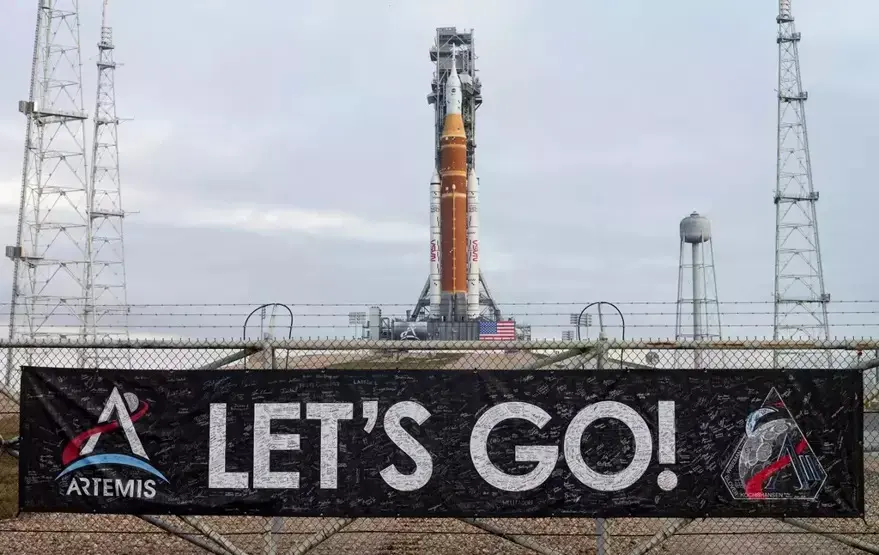
The mission could launch as early as April 2026, carrying four astronauts on a 10-day journey around the Moon aboard the Orion spacecraft launched by the powerful Space Launch System rocket.
If successful, Artemis II will mark the first time astronauts travel to the Moon region since the Apollo era ended in 1972, opening a new chapter in human space exploration.
Why Artemis II Is a Historic Mission
The Artemis program represents NASA’s effort to bring astronauts back to deep space and eventually establish a long-term human presence on the Moon.
The last crewed lunar mission was Apollo 17, which returned astronauts from the Moon in December 1972. Since then, humans have not traveled beyond low-Earth orbit.
Artemis II will therefore be the first crewed mission beyond Earth orbit in more than 50 years.
However, unlike the Apollo missions that landed astronauts directly on the lunar surface, Artemis II will perform a lunar flyby. Astronauts will travel around the Moon and return to Earth without landing.
This test mission will allow NASA to evaluate the spacecraft systems needed for future lunar landings.
Meet the Artemis II Crew
NASA has already announced the four astronauts who will participate in the mission:
- Reid Wiseman – Mission Commander
- Victor Glover – Pilot
- Christina Koch – Mission Specialist
- Jeremy Hansen – Mission Specialist
The inclusion of Jeremy Hansen also marks the first time a Canadian astronaut will travel to the Moon, highlighting the international collaboration involved in the Artemis program.
How the Mission Will Work
The Artemis II mission is expected to last around 10 days.
The journey will include several phases:
1. Launch from Florida
The rocket will lift off from Kennedy Space Center, one of the world’s most famous launch sites.
2. Earth Orbit and System Checks
After launch, the Orion spacecraft will spend time in high Earth orbit while astronauts test life-support systems and spacecraft controls.
3. Journey to the Moon
The spacecraft will perform a maneuver known as trans-lunar injection, sending it toward the Moon on a “free-return trajectory.”
4. Lunar Flyby
Astronauts will travel thousands of kilometers around the Moon before beginning their return to Earth.
5. Return and Splashdown
The capsule will re-enter Earth’s atmosphere and splash down in the ocean, completing the mission.
A Major Step Toward Future Moon Landings
Although Artemis II will not land on the Moon, it is a critical step toward future missions that will.
NASA plans to follow the mission with additional Artemis flights that aim to place astronauts on the lunar surface later in the decade.
The long-term goals of the Artemis program include:
- Establishing a sustainable human presence on the Moon
- Exploring the Moon’s south pole region
- Building a lunar space station called Gateway
- Preparing astronauts for future missions to Mars
NASA officials say the Moon will serve as a testing ground for technologies and systems needed for deep-space exploration.
Why the Moon Matters Again
Interest in lunar exploration has grown significantly in recent years. Several countries and private companies are investing heavily in Moon missions.
Scientists believe the Moon could provide valuable resources such as water ice, which could be converted into drinking water, oxygen, or even rocket fuel.
Exploring the Moon also helps scientists better understand the early history of the solar system.
Challenges and Delays
The Artemis program has faced multiple delays due to technical challenges and safety reviews.
Engineers have been working to resolve issues such as hydrogen leaks and system testing requirements before the mission can proceed.
NASA has emphasized that astronaut safety remains the top priority, which is why the agency continues to conduct extensive testing before launching the mission.
A New Era of Space Exploration
The Artemis II mission represents more than just a return to the Moon. It signals the start of a new era in human exploration beyond Earth.
Unlike the Apollo missions, which focused mainly on short-term exploration, the Artemis program aims to build a long-term presence in space.
By working with international partners and private companies, NASA hopes to create a sustainable path toward exploring the Moon, Mars, and beyond.
Final Thoughts
After more than 50 years since humans last traveled to the Moon’s vicinity, NASA is preparing to take the next giant step with the Artemis II mission.
If the launch proceeds as planned, astronauts will once again venture beyond Earth orbit, testing the systems that could one day allow humans to live and work on the Moon.
For space enthusiasts and scientists around the world, Artemis II represents a powerful reminder that humanity’s journey into deep space is only just beginning.
Frequently Asked Questions (FAQs)
1. What is Artemis II?
Artemis II is NASA’s first crewed mission in the Artemis Moon exploration program.
2. When could Artemis II launch?
NASA is targeting a launch window around April 2026.
3. Will Artemis II land on the Moon?
No, it will perform a flyby around the Moon and return to Earth.
4. How long will the mission last?
The mission is expected to last about 10 days.
5. How many astronauts will be on the mission?
Four astronauts will be aboard the spacecraft.
6. Who is leading the mission?
NASA astronaut Reid Wiseman will serve as mission commander.
7. What spacecraft will carry the astronauts?
The Orion spacecraft will transport the crew.
8. What rocket will launch the mission?
NASA’s Space Launch System (SLS) rocket will launch Artemis II.
9. When did humans last travel to the Moon?
The last mission was Apollo 17 in 1972.
10. What is the goal of the Artemis program?
To return humans to the Moon and prepare for future Mars missions.
11. Will there be a future Moon landing?
Yes, later Artemis missions aim to land astronauts on the Moon.
12. Where will the rocket launch from?
Kennedy Space Center in Florida.
13. Is the mission international?
Yes, it includes collaboration with the Canadian Space Agency.
14. Why is the Moon important for future space exploration?
It can help test technologies and resources for deep-space missions.
15. What comes after Artemis II?
Future Artemis missions are expected to attempt lunar landings later in the decade.
A Message from BollywoodView.in Team
At BollywoodView.in, we believe curiosity about the world — and beyond — keeps humanity moving forward. Stories like the Artemis II mission remind us how far science and exploration have come since the first Moon landings.
Stay connected with BollywoodView.in for more global science, technology, and space discoveries shaping our future. 🚀🌙
Pingback: Japan’s Cherry Blossom Season Begins: Everything You Need to Know About Sakura 2026