


South Korea’s economic outlook is facing renewed uncertainty as analysts warn that a prolonged crisis involving Iran could significantly slow growth in South Korea—potentially dragging it close to zero under worst-case scenarios. The warning comes amid rising geopolitical tensions, volatile energy markets, and increasing pressure on global trade.
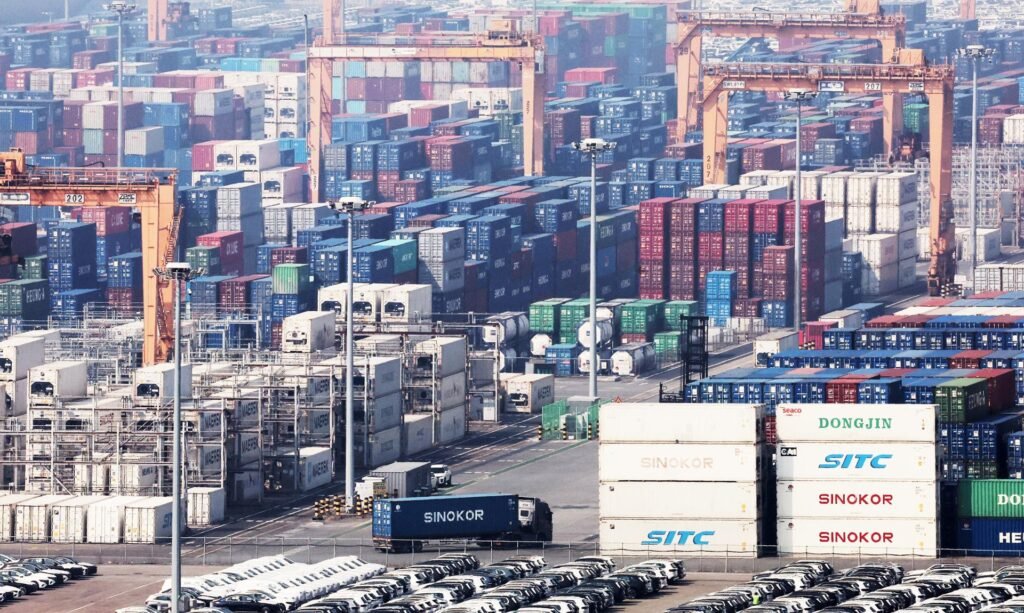
📉 Growing Concerns Over Economic Slowdown
Recent economic reports and market analyses suggest that continued instability linked to Iran could have far-reaching consequences for South Korea’s economy, which is heavily dependent on imports and exports.
Key concerns include:
- Rising global oil and gas prices
- Supply chain disruptions
- Currency volatility
- Declining investor confidence
South Korea, as a major manufacturing and export-driven economy, is particularly vulnerable to external shocks, especially those affecting energy supply routes in the Middle East.
⚡ Why the Iran Crisis Matters for South Korea
The ongoing tensions involving Iran have direct and indirect economic implications:
1. Heavy Dependence on Energy Imports
South Korea imports the majority of its energy needs, with a significant portion coming from the Middle East. Any disruption in supply or spike in prices increases:
- Production costs
- Transportation expenses
- Inflationary pressure
2. Impact on Global Trade
Iran-related instability can disrupt key shipping lanes, including critical oil transit routes. This affects:
- Export timelines
- Shipping costs
- Global demand for Korean goods
3. Financial Market Volatility
Recent market trends show:
- Weakening of the Korean won
- Fluctuations in stock markets
- Increased uncertainty among investors
These factors collectively contribute to slower economic activity.
📊 Growth Forecasts Under Pressure
Economic analysts have indicated that if the crisis continues for an extended period, South Korea’s GDP growth could:
- Drop significantly below current projections
- Approach near-zero growth levels in extreme scenarios
While this represents a worst-case outlook, it reflects the seriousness of ongoing geopolitical risks.
🏭 Key Sectors at Risk
Several major sectors of South Korea’s economy could be impacted:
Manufacturing
Higher energy costs directly affect production, reducing competitiveness in global markets.
Exports
South Korea’s economy relies heavily on exports such as:
- Electronics
- Automobiles
- Semiconductors
Global uncertainty can reduce demand and delay shipments.
Consumer Spending
Rising inflation and economic uncertainty may lead to:
- Reduced household spending
- Slower domestic growth
🌍 Global Ripple Effects
The situation is not limited to South Korea. The Iran crisis has broader implications:
- Increased global energy prices
- Supply chain disruptions across Asia and Europe
- Slower growth in multiple economies
However, South Korea’s high exposure to trade and energy imports makes it more sensitive compared to some other nations.
🧠 Government and Policy Response
Authorities in South Korea are closely monitoring the situation and may consider:
- Strategic energy reserves
- Policy measures to stabilize currency
- Support for affected industries
Central banks and policymakers may also adjust interest rates or introduce stimulus measures if economic conditions worsen.
📌 Is Near-Zero Growth Likely?
It is important to note:
- Near-zero growth is a worst-case projection, not a confirmed outcome
- Actual impact will depend on:
- Duration of the Iran crisis
- Global economic conditions
- Policy responses
If tensions ease, the economy could stabilize more quickly than expected.
🧠 Final Thoughts (Professional)
The warning that South Korea’s economic growth could approach zero highlights the increasing vulnerability of global economies to geopolitical disruptions. As energy markets remain volatile and trade routes face uncertainty, export-driven nations like South Korea must navigate a complex and rapidly changing environment.
While the scenario remains conditional, it underscores the importance of diversified energy strategies, resilient supply chains, and proactive economic policies. Monitoring developments in the Middle East will be critical in assessing the future trajectory of South Korea’s economy.