


Across the United Kingdom, millions of households continue to search for information about financial support from the government. One topic that has been widely discussed online is the “DWP £900 Cost of Living Payment in March 2026.” Many people want to know whether this payment is real, who qualifies, and when it might be paid.
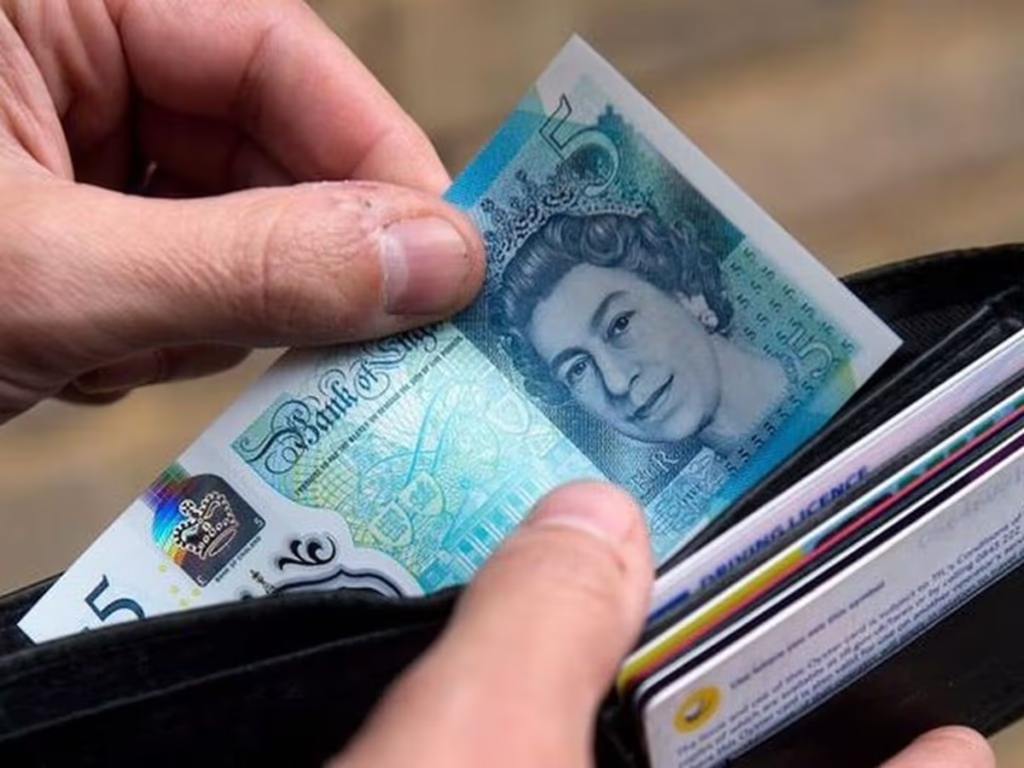
The rising cost of food, energy, rent, and other essentials has kept the cost-of-living crisis in the spotlight. As a result, rumours about new government payments often spread quickly across social media and online forums. However, it is important to separate verified government policy from speculation.
This guide explains the facts about the £900 Cost of Living Payment, the eligibility rules used in the original scheme, payment structures, and the current support available to households in 2026.
Understanding the DWP Cost of Living Payment Scheme
The Cost of Living Payment programme was introduced by the UK government to help households struggling with inflation and high energy prices. The scheme was administered by the Department for Work and Pensions (DWP) and HM Revenue and Customs (HMRC).
These payments were designed primarily for people receiving means-tested benefits such as Universal Credit or Pension Credit. Importantly, recipients did not need to apply for the payments. If someone met the eligibility criteria during the qualifying period, the money was automatically paid into their bank account.
The programme ran between 2022 and early 2024, providing direct cash support to millions of households across England, Scotland, Wales, and Northern Ireland.
Was There a £900 Cost of Living Payment?
Yes — but it was not paid as a single lump sum.
The £900 support package introduced by the government was divided into three separate instalments during the 2023–2024 financial period.
Breakdown of the £900 Support Package
| Payment | Amount | Approximate Payment Period |
|---|---|---|
| First payment | £301 | April – May 2023 |
| Second payment | £300 | October – November 2023 |
| Third payment | £299 | February 2024 |
The final payment of £299 was issued between 6 February and 22 February 2024, depending on the type of benefit received.
Overall, the scheme provided essential support to millions of low-income households during a period of intense financial pressure.
Is There a £900 Cost of Living Payment in March 2026?
Despite many online claims and viral posts, there is currently no confirmed £900 Cost of Living Payment scheduled for March 2026.
Official government guidance confirms that the national scheme of cost-of-living payments ended in 2024 after the final instalment was issued.
Multiple official sources have also stated that no new nationwide cost-of-living payments are planned for 2026.
This means that headlines claiming a new £900 payment in 2026 are likely referring to the earlier programme or are based on misinformation circulating online.
Who Was Eligible for the Cost of Living Payments?
Although the £900 payment is no longer active, understanding the eligibility criteria helps explain how the scheme worked.
The payments were targeted at individuals receiving means-tested benefits.
Qualifying benefits included:
- Universal Credit
- Pension Credit
- Income-based Jobseeker’s Allowance (JSA)
- Income-related Employment and Support Allowance (ESA)
- Income Support
- Child Tax Credit
- Working Tax Credit
Anyone receiving one of these benefits during the official qualifying dates automatically received the payment.
The government designed the scheme so that low-income households, pensioners, and vulnerable individuals would receive support without needing to complete additional paperwork.
Who Was Not Eligible?
Some people did not qualify for the payments.
Examples include individuals who only received:
- Contribution-based Jobseeker’s Allowance
- New Style ESA
- Certain disability benefits without income-related support
- Households above the benefit income thresholds
Eligibility depended entirely on receiving a qualifying benefit during the official assessment window.
How the Payments Were Delivered
One of the most convenient features of the cost-of-living payments was that no application process was required.
If you were eligible, the payment was automatically sent to the same bank account used for your benefits.
Payments normally appeared with references such as:
- DWP COL
- HMRC COLS
Important characteristics of the payments:
- They were tax-free
- They did not affect existing benefits
- They did not need to be repaid
This automatic system ensured that millions of households received financial help quickly.
Why the Government Introduced Cost of Living Payments
The support scheme was introduced in response to a combination of economic pressures affecting households across the UK.
1. Rising Inflation
Inflation reached levels not seen for decades, causing everyday goods to become significantly more expensive.
2. Energy Price Crisis
Energy prices increased sharply due to global supply disruptions and geopolitical tensions.
3. Food Price Inflation
Basic groceries became more expensive, affecting families on tight budgets.
4. Housing Costs
Rent and mortgage payments increased in many regions across the UK.
These factors combined to create a cost-of-living crisis that required government intervention.
What Support Is Available in 2026?
Even though the £900 payment scheme has ended, several forms of financial support still exist for households in the UK.
Household Support Fund
The Household Support Fund provides financial help through local councils.
Support may include:
- Direct cash payments
- Food vouchers
- Energy bill assistance
- Emergency grants
In some areas, households may receive support worth up to several hundred pounds, depending on council policies.
Energy Bill Reductions
The government has introduced changes designed to reduce average energy bills, partly by removing certain policy costs from household energy charges.
These structural adjustments are expected to reduce bills rather than provide direct cash payments.
Cold Weather Payments
Eligible households may receive £25 for each week of extremely cold weather during winter months if temperatures drop below certain thresholds.
These payments are automatically issued to individuals receiving qualifying benefits.
Winter Fuel Payments
Older residents may receive £100 to £300 to help with heating costs during winter, depending on their age and eligibility criteria.
Common Misinformation About Cost of Living Payments
Many misleading posts circulate online claiming:
- £900 payments returning in 2026
- £450 emergency payments
- £250 bonus cost-of-living support
However, official government guidance clearly states that the national payment programme has ended.
Some confusion arises because local council grants and support funds continue to exist, which can sometimes appear similar to national payments.
Frequently Asked Questions (FAQs)
1. Is the £900 Cost of Living Payment coming in March 2026?
No. The national scheme ended in 2024.
2. Why are people talking about a £900 payment again?
Many online posts are referring to the earlier support package.
3. Do I need to apply for Cost of Living Payments?
When the scheme existed, payments were automatic.
4. Can I still claim the £900 payment?
No, the payment programme has ended.
5. What benefits qualified for the payments?
Universal Credit, Pension Credit, Income Support, ESA, JSA, and Tax Credits.
6. Were the payments taxable?
No. They were completely tax-free.
7. Did the payments affect other benefits?
No. They did not reduce existing benefit payments.
8. What help is available now?
Support includes council grants, energy bill support, and winter payments.
9. Can working people receive support?
Yes, if they qualify for benefits such as Universal Credit.
10. What is the Household Support Fund?
A government-funded programme distributed by local councils.
11. How were payments sent?
Directly to bank accounts used for benefits.
12. Are new cost-of-living payments planned?
Currently, no new national payments have been announced.
13. Can pensioners receive support in 2026?
Yes, through Winter Fuel Payments and other schemes.
14. How can I check eligibility for benefits?
Use official online benefit calculators or government services.
15. What should I do if I see payment scams?
Ignore messages asking for bank details — the government never requests this information by text or email.
Final Thoughts
The £900 Cost of Living Payment was an important government support scheme that helped millions of households during one of the most challenging economic periods in recent years. While many people continue searching for a similar payment in 2026, official guidance confirms that the programme ended after the final instalment in February 2024.
Although the direct payments are no longer being issued, financial support has not completely disappeared. Assistance still exists through local council grants, energy bill reductions, winter payments, and targeted support programmes designed to help households facing financial pressure.
As the economic situation evolves, future support measures may change. For now, the best approach is to stay informed through official government announcements and regularly check for local or national support schemes that may be available to you or your household.
Disclaimer:
The information in this article is for general informational purposes only. Government policies, eligibility criteria, and payment programmes may change at any time. Readers should verify the latest updates through official UK government sources such as GOV.UK or their local council website. This article does not provide financial or legal advice