

Summary:
Supermarket giants Lidl and Iceland have become the first brands to have ads banned under the UK’s new junk food advertising rules. The move signals stricter enforcement as authorities aim to tackle unhealthy food promotion.
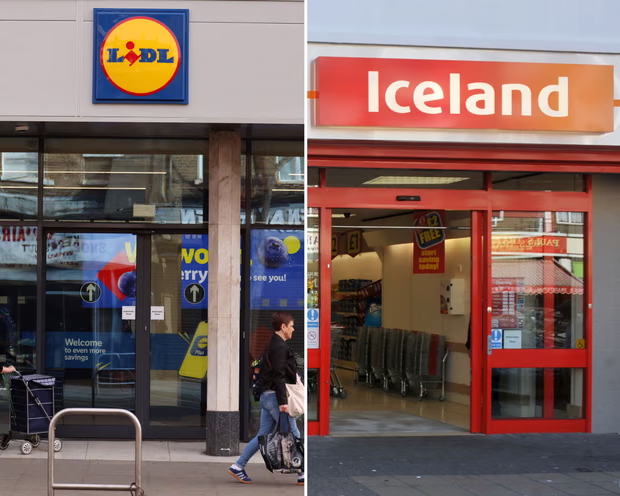
The UK’s crackdown on junk food advertising has officially begun—and two major supermarket brands are already feeling the impact.
Ads from Lidl and Iceland have been banned under newly introduced regulations designed to limit the promotion of foods high in fat, sugar, and salt (HFSS).
This marks one of the first real tests of the updated rules—and it’s sending a clear message to the industry.
What Were the Ads About?
The banned advertisements reportedly promoted products that fall under the UK’s HFSS category.
Even though such products are widely sold, the new rules restrict how and when they can be advertised, especially in ways that could appeal to children or encourage excessive consumption.
Regulators found that the ads crossed those boundaries.
Why the UK Is Tightening Rules
The government has been pushing to reduce obesity rates, particularly among children.
Key goals behind these rules include:
- Limiting exposure to unhealthy food advertising
- Encouraging better eating habits
- Reducing long-term health risks
By targeting advertising rather than banning products, authorities are trying to influence behavior without restricting choice entirely.
What This Means for Brands
This is just the beginning.
Food and retail companies will now have to:
- Rethink marketing strategies
- Be more careful about messaging
- Avoid targeting vulnerable audiences
Even large brands like Lidl and Iceland are not exempt, which shows how serious enforcement could become.
Industry Reaction
The move has sparked mixed reactions.
Some support the decision, saying it’s a necessary step toward improving public health. Others argue that the rules may be too restrictive and could impact business operations.
For advertisers, the line between acceptable and non-compliant content is now much tighter.
Our Perspective
From a Global Insight angle, this is part of a wider global trend.
Governments are increasingly stepping into the advertising space—not just regulating products, but controlling how they are promoted.
The UK is taking a stricter approach, and other countries could follow.
For brands, this means adapting quickly. For consumers, it could gradually reshape what kind of food messaging they see daily.
Final Thoughts
The banning of Lidl and Iceland ads is more than just a one-off decision—it’s a signal.
The rules are no longer theoretical—they’re being enforced.
As the policy rolls out further, more brands could face similar action, and the advertising landscape for food products may change significantly.
FAQs
1. Which brands had ads banned?
Lidl and Iceland.
2. Why were the ads banned?
They promoted products classified as high in fat, sugar, and salt.
3. What are HFSS rules?
Regulations limiting advertising of unhealthy food products.
4. Who is the target of these rules?
Mainly to protect children and reduce obesity.
5. Will more ads be banned?
Likely yes, as enforcement continues.