


Summary:
Concerns around fake or diluted maple syrup have resurfaced, with authorities in North America cracking down on fraud, illegal sales, and misleading labeling. While most products remain genuine, experts say consumers should still stay alert.
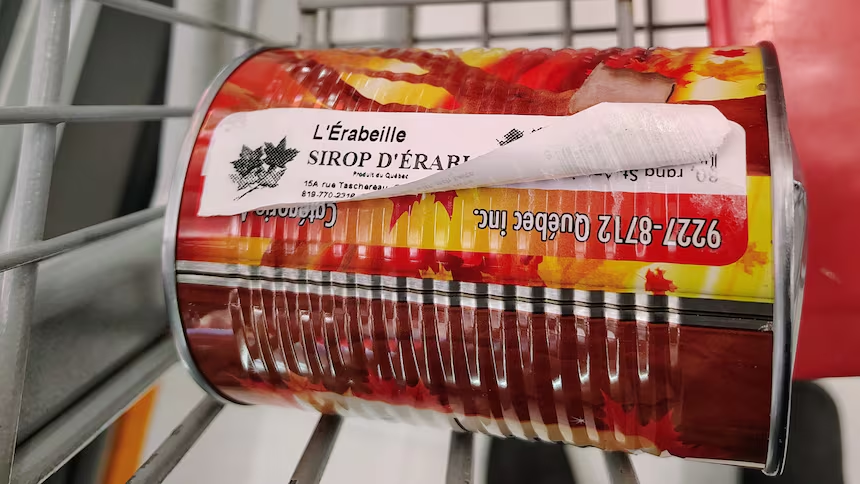
The phrase “fake maple syrup scandal” is trending again—but the reality is more nuanced than the headline suggests.
Across parts of North America, including Canada and the United States, authorities have been dealing with cases involving mislabelled, diluted, or illegally traded maple syrup. These incidents have sparked fresh attention, especially online, where the story is spreading quickly.
What’s Actually Going On?
The issue isn’t that all maple syrup is fake.
Instead, there are three main problems being reported:
- Dilution: Some sellers mix real maple syrup with cheaper sugars
- Mislabeling: Products marketed as “pure maple syrup” that aren’t 100% authentic
- Black market trading: Unauthorized sales bypassing official supply systems
These practices are illegal and have led to investigations and enforcement actions in recent years.
Why Maple Syrup Is a Target
Maple syrup might seem like a simple product, but it’s actually a high-value commodity.
Canada, especially the province of Quebec, produces the majority of the world’s maple syrup. The industry is tightly controlled, and large reserves are maintained to stabilize prices.
Because of its value, maple syrup has even been the target of major thefts in the past—turning it into an unexpected black-market product.
Is This a Widespread Problem?
Not exactly.
Most maple syrup sold through trusted retailers is genuine and safe. The current concern is more about isolated fraud cases rather than a system-wide issue.
However, the viral nature of the story has made it seem bigger than it actually is.
How to Spot Real Maple Syrup
If you want to be sure you’re getting the real thing:
- Check labels for “100% pure maple syrup”
- Avoid products with added ingredients or unclear origins
- Look for certifications or trusted brands
- Be cautious of unusually cheap prices
Real maple syrup typically has a rich flavor and consistent texture that’s hard to fake completely.
Our Perspective
From a Global Insight angle, this story shows how quickly niche issues can turn into global “scandals” online.
A few real cases of fraud can easily snowball into widespread panic, especially when social media amplifies the narrative. In reality, the maple syrup industry remains largely reliable, with strict regulations in place.
What’s more interesting is how even everyday products—like syrup—can become high-stakes commodities when supply, demand, and pricing align.
Final Thoughts
The “fake maple syrup scandal” isn’t a full-blown crisis—but it’s not completely baseless either.
There are genuine concerns around fraud and labeling, but they remain limited in scope. For consumers, the takeaway is simple: stay informed, buy from trusted sources, and don’t get carried away by viral headlines.
Sometimes, the story isn’t as dramatic as it sounds—but it’s still worth understanding.
FAQs
1. Is maple syrup being widely faked?
No, most products are genuine. Issues are limited to specific fraud cases.
2. Where is this happening?
Mainly in Canada and the United States.
3. What kind of fraud is involved?
Dilution, mislabeling, and illegal sales.
4. Is it safe to consume?
Yes, if purchased from trusted sources.
5. Why is maple syrup valuable?
Because of limited production and high global demand.



- Lidl and Iceland Ads First to Be Banned Under New UK Junk Food Rules
- Airport to Botany Busway Project May Require Acquisition of 630 Auckland Properties
- 7-Eleven Sandwiches, Subs and Wraps Recalled Over Listeria Concerns
- Fake Maple Syrup Scandal: What’s Really Happening Behind the Headlines
- Akshay Kumar’s ‘Bhooth Bangla’ Advance Booking: Priyadarshan’s Horror-Comedy Sells 13K Tickets; Will it Beat Post-Pandemic Records?