

Read Time: 1 min
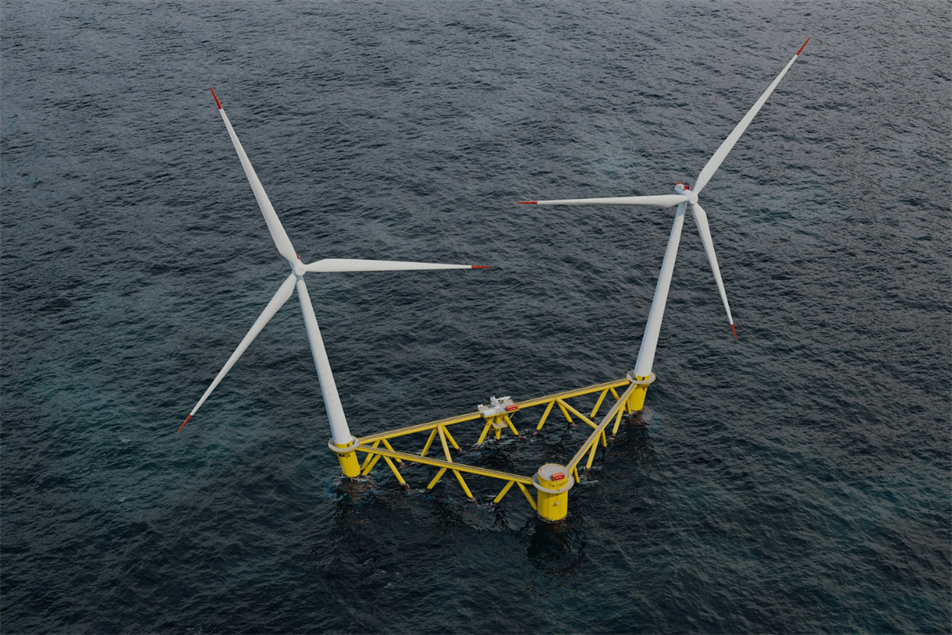
The Breaking News: A Major Blow to UK Floating Wind
The ambitious race for renewable energy hit a massive roadblock today, Wednesday, April 8, 2026. In a move that has sent shockwaves through the green energy sector, the UK’s Department for Energy Security and Net Zero (DESNZ) has officially terminated the Contract for Difference (CfD) for the TwinHub floating offshore wind project.
TwinHub, located off the coast of Cornwall, was hailed as the “stepping stone” for the UK’s goal of 5GW of floating wind by 2030. However, after months of financial bleeding and missed milestones, the government has pulled the plug on the contract that guaranteed the project’s revenue.


The Mystery: Why Did TwinHub Fail?
The termination follows a series of red flags that your favorite “Growth Engineer” here at bollywoodview.in has been tracking for months. The primary reasons behind this high-stakes collapse include:
- The “Financial Bleed”: On January 30, 2026, the project’s developer, Hexicon, reported a massive financial impairment of SEK 115 Million (approx. ₹90 Crore). The company admitted that rising inflation and spiraling supply chain costs had rendered the original strike price of £87.30/MWh (set in 2022) completely unviable.
- The Failed Divestment: Hexicon had been desperately trying to sell the project to a “strategic investor” since early 2024. However, with the floating wind market currently seen as “high risk,” no buyer was willing to step into the fire.
- Missed Milestones: Under CfD rules, projects must reach a “Financial Investment Decision” (FID) within a specific timeframe. TwinHub was unable to secure the capital needed to move from the drawing board to the water.
The “Suspense” at Sea: What Happens to the Celtic Sea?
The termination of TwinHub isn’t just about one project; it’s a warning sign for the entire Celtic Sea development. Authorities were banking on this 32MW demonstration to prove that TwinWind technology (two turbines on one floating platform) could work in deep waters.
With TwinHub gone, the UK’s 2030 floating wind targets are now in serious jeopardy. Industry insiders are calling this an “endurance test” where only the most capital-rich developers will survive. For a “team of one” or small developers, the message is clear: the sea is a brutal business.
UK Floating Wind Cost Comparison (Current Market vs. AR4)
Note: The gap between 2022 and 2026 costs is the reason TwinHub collapsed.
| Metric | TwinHub (AR4 – 2022) | Current Market (AR7 – 2026) | Trend |
| Strike Price (per MWh) | £87.30 | £216.46 | ⬆️ 148% Increase |
| Steel & Cabling Costs | Baseline | +45% | ⬆️ Rising |
| Supply Chain Stability | Stable | Volatile | ⚠️ High Risk |
| Investor Interest | High | Cautious/Low | ⬇️ Falling |
Final Thoughts: The “Engineer’s” Take
As a mechanical engineer, I see this as a classic case of “Technical Success vs. Financial Failure.” The technology works, but the economics don’t. For the UK to reach its Net Zero goals, the government needs to address the “Distance-Based” transmission charges and the massive gap in supply chain logistics. TwinHub was a pioneer that got caught in an economic storm.
Frequently Asked Questions (FAQs)
1. Why was the TwinHub CfD terminated?
The UK government terminated the contract because the developer, Hexicon, could not reach the required financial milestones due to rising costs, high inflation, and an inability to find a buyer for the project.
2. Where was the TwinHub project located?
It was set to be built in the Celtic Sea, approximately 16km off the coast of Hayle in Cornwall, UK.
3. What happens to Hexicon now?
Hexicon has written off the project as a financial loss (Impairment). They are focusing on their other global portfolios while trying to “orderly exit” their liabilities in the UK.
4. Will this affect UK electricity bills?
In the short term, no. However, the failure to launch low-cost renewable projects like this may keep the UK dependent on expensive gas imports for longer than planned.
5. What is the new strike price for floating wind in 2026?
The latest auction (AR7) has set a much higher strike price of £216.46/MWh to account for the massive inflation that killed projects like TwinHub.
Author: bollywoodview.in
ALSO READ
Slash Your Utility Bills: The 2026 Energy Saving Checklist for High-Performance Kitchens
Author Note: Running Breeza Cloud Kitchen while coming from a mechanical engineering and HVAC background has taught me one thing: efficiency isn’t just a goal; it’s a survival tactic. In 2026, energy costs are the silent killers of profitability. This is the exact blueprint I use to keep my operations lean and my bills low.
Read Time: 1.5 min

The Engineer’s Secret: HVAC & Thermal Control
As an HVAC specialist, I see most kitchens throwing money away through their ceilings. Your exhaust and cooling systems are your biggest energy consumers.
- VFD Installation: Ensure your exhaust hoods use Variable Frequency Drives (VFDs). Running a fan at 100% when you’re only simmering a soup is a technical crime.
- The “Seal” Check: Inspect the gaskets on your walk-in chillers and reach-in fridges. A 2mm gap can increase compressor load by 15%.
- AC Calibration: Set your kitchen AC to 24°C. In a high-heat environment, trying to reach 18°C is a losing battle that only spikes your “Peak Load” charges.
The “Breeza” Strategy: Operational Efficiency
Engineering is about timing. At Breeza, we don’t just turn everything on at 10:00 AM.
- Staggered Start-ups: Ovens, fryers, and grills should be powered up in 15-minute intervals. This prevents a “Current Surge” that can push your commercial meter into a higher tariff bracket.
- Induction Pivot: Whenever possible, switch from open-flame gas to induction. Induction is 90% energy efficient compared to the 40% efficiency of gas, keeping the kitchen cooler and reducing the load on your AC.
- Copper Coil Maintenance: Every 30 days, we clean the condenser coils on all refrigeration units. Dust acts as an insulator; removing it allows for faster heat exchange and lower power draw.
The Tech Upgrade: Smart Monitoring
- IoT Sub-Metering: Install small sensors on your heavy-duty equipment. If a fryer is pulling more amps than usual, it’s a sign of a failing heating element. Fix it before it breaks and burns your budget.
- LED Transition: It sounds simple, but in a 24/7 cloud kitchen, switching from T5 tubes to high-lumen LEDs pays for itself in just four months.
Frequently Asked Questions (FAQs)
1. What is the most effective way to save energy in a cloud kitchen? Staggering the start-up of heavy equipment is the fastest way to avoid “Maximum Demand” penalties on your commercial electricity bill.
2. How often should HVAC systems be serviced in a kitchen? In a high-grease environment, filters should be cleaned weekly, and a deep technical calibration of the motors should happen every quarter.
3. Does turning off the lights really help? Yes, but the real savings come from motion sensors in dry stores and walk-in freezers where staff often forget to flick the switch.
4. Why is induction better for energy bills? Induction transfers heat directly to the pan, meaning less ambient heat escapes into the room. This reduces your cooling (AC) costs significantly.
5. What is the “Peak Load” charge? It is a penalty fee charged by electricity providers if your total power consumption hits a massive spike at once. Managing your “staggered start” prevents this.
Author: bollywoodview.in