


By Lucky | Strategy & Growth Expert
Apple’s journey is like a blockbuster movie. It has a hero (Steve Jobs), a downfall (the 90s), and the greatest comeback in business history. As of April 2026, Apple is celebrating its 50th Anniversary, and the numbers are staggering.
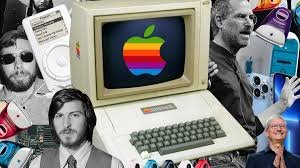
1. The Three Eras of Apple
Phase 1: The Garage Days (1976–1984)
- The Start: Steve Jobs and Steve Wozniak started in a garage.
- The Hit: The Apple II was the first “PC” that regular people could use.
- The Innovation: The Macintosh (1984) introduced the “Mouse” and “Icons”—making computers feel human.
Phase 2: The Near-Death Experience (1985–1997)
- The Conflict: Steve Jobs was fired in 1985. Without his “Systems-Thinking,” Apple launched too many boring products (printers, cameras, even a gaming console called Pippin).
- The Loss: By 1996, Apple was 90 days away from bankruptcy. They were losing hundreds of millions of dollars.
- The Savior: Microsoft actually invested $150 million in 1997 to keep Apple alive.
Phase 3: The “iRevolution” (1998–Present)
- The Comeback: Jobs returned and launched the iMac (1998), iPod (2001), and the “Cinematic” iPhone (2007).
- The Era of Cook: Under Tim Cook (2011–Present), Apple became the world’s first $1 trillion, then $2 trillion, and now nearly $4 trillion company.
2. The Money Talk: Revenue & Profit (Verified 2025-26 Data)
Apple doesn’t just sell products; they sell a “Premium” ecosystem. Here is how their “Bank Account” looks according to recent financial reports.
| Year | Revenue (Money Coming In) | Net Profit (Money Kept) | Key Product Driver |
| 1997 | $7.1 Billion | ($1 Billion Loss) | Bankruptcy Scare |
| 2007 | $24.6 Billion | $3.5 Billion | iPhone Launch |
| 2017 | $229.2 Billion | $48.3 Billion | iPhone X / Services |
| 2024 | $391.0 Billion | $97.0 Billion | iPhone 15 / Vision Pro |
| 2025 (Full Year) | $416.2 Billion | $105.0 Billion | AI & Services |
Fact Check: In 2025, Apple’s Services (iCloud, Music, App Store) hit an all-time high, making up over 25% of their total profit. They aren’t just a hardware company anymore; they are a “Subscription Powerhouse.”
3. The Product Wall: Hits vs. Misses
To be a “Dhurandhar” in business, you must be willing to fail. Apple has some famous “Zero Knowledge” disasters:
- The Hits: iPhone (The King), iPad, AirPods (The “Secret” Multi-Billion business), and the MacBook M-Series.
- The Misses: * The Apple Newton (1993): A tablet that couldn’t read handwriting properly.
- The Pippin (1996): A failed gaming console.
- The AirPower (2019): A charging mat that was announced but never released because it kept overheating.
- The Butterfly Keyboard: A “System Failure” that cost them $50 million in lawsuits.


4. Five Lessons to Learn (The “Lucky” Strategy)
- “Simplicity is the Ultimate Sophistication”: Apple doesn’t give you 50 buttons. They give you one. In your business, don’t confuse the customer. Keep it clean.
- Focus on the Ecosystem: Apple makes it hard to leave. If you have an iPhone, you want a Mac. If you have a Mac, you want AirPods. Build a “Loop” where your customers stay with you forever.
- Premium Pricing: Apple never competes on price. They don’t care if a Samsung phone is cheaper. They sell Value and Status. Never be the cheapest in the market; be the best.
- Own the Technology: Apple started making their own chips (M1/M2/M3). When you own the “Core” of your business, you don’t have to rely on others.
- Admit and Pivot: When the “Butterfly Keyboard” failed, they killed it and went back to the old design. If something isn’t working in your workflow, cut it fast.
📋 Frequently Asked Questions (F & Q)
Q1: Is Apple still the most valuable company in 2026?
Answer: It is a neck-and-neck race with Nvidia (due to AI) and Microsoft, but Apple remains the world leader in “Consumer Brand Value.”
Q2: What is Apple’s biggest risk right now?
Answer: Over-reliance on China for manufacturing. In 2025-26, Apple committed $600 billion to move more production to India and the USA to diversify.
Q3: Why did Steve Jobs name it Apple?
Answer: He was on a “Fruitarian” diet at the time and thought the name sounded “fun, spirited, and not intimidating.”