


NEW DELHI / CHANDIGARH — In a world dominated by fast fashion, the “Cinematic” beauty of hand-embroidered Phulkari is making a massive comeback. A series of high-profile showcases in the national capital—most notably at the National Crafts Museum and Hastkala Academy on March 25, 2026—has successfully refocused attention on this fading art form.
Led by the Nabha Foundation and curated by industry experts, the event proved that Phulkari isn’t just “Flower-work”; it is a living archive of Punjabi heritage.
⏳ Read Time: 2 Minutes
1. The “Nabha” Legacy
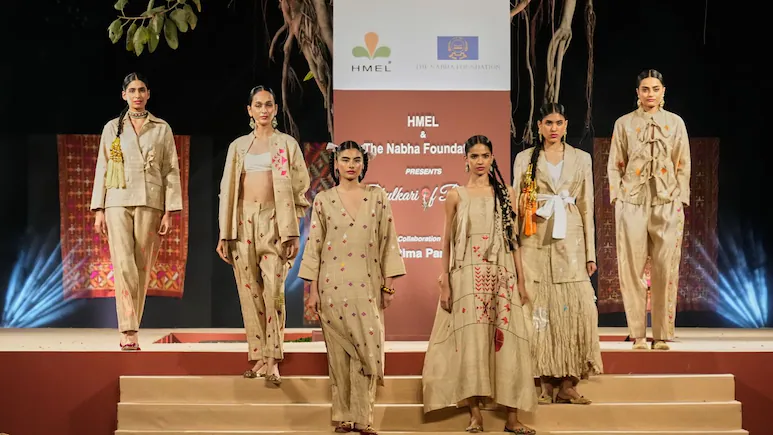
The most recent highlight was the “Phulkari of Punjab” showcase held in late March.
- Royal Patronage: Spearheaded by Jeet Nabha Khemka of the former royal family of Nabha, the event displayed rare, pre-Partition Baghs (densely embroidered shawls) passed down through generations.
- Modern Twist: The showcase featured a “Dhurandhar” collaboration with designer Pratima Pandey, who combined traditional Phulkari with contemporary silhouettes, making it relevant for the 2026 fashion market.
2. Reclaiming History at Latitude 28
Parallel to the museum events, an exhibition titled “Sut Te Saah: Stories Woven in Phulkari” at Gallery Latitude 28 has been drawing massive crowds.
- The “Memory” Lens: Curated by Shreya Sharma and founder Bhavna Kakar, the exhibit moved Phulkari from the “periphery” to the “center,” treating it as a complex form of knowledge produced by women.
- The Three Sections: The show was divided into Sankraman (Transition), Vishvaas ate Katha (Belief), and Rihaish (Daily Life), showing how the craft was used in everything from weddings to mourning.
3. Why This Matters in 2026
This isn’t just about art; it’s about Livelihood.
- Economic Impact: Initiatives like the Nabha Phulkari Mahila Industrial Cooperative now support over 400 women artisans from rural Punjab, turning a household tradition into a sustainable business model.
- Global Demand: With your target audience in the USA and UK, Phulkari is increasingly being seen as a “Luxury” artisanal export, fitting the global trend of sustainable, slow fashion.
📊 Phulkari vs. Modern Embroidery
| Feature | Traditional Phulkari | Machine Embroidery |
| Material | Hand-spun Khaddar (Cotton) | Synthetic/Polyester |
| Thread | Pat (Untwisted Silk) | Rayon/Polyester |
| Symbolism | Every stitch tells a family story. | Mass-produced designs. |
| Value | Increases with age (Heirloom). | Depreciates over time. |
Final Takes:
By taking a craft from a village in Punjab and putting it in a ‘Premium’ Delhi gallery, these curators have increased its value tenfold! For my readers, Phulkari is a reminder that the most beautiful things in life aren’t made by machines, but by ‘Thread and Breath’ (Sut te Saah). Whether you’re wearing it at a wedding or hanging it as art, Phulkari is the ultimate ‘Dhurandhar’ style statement for 2026!”
📋 Frequently Asked Questions (F & Q)
Q1: What is the difference between Phulkari and Bagh?
Answer: Phulkari literally means “flower work” where some base cloth is visible. A Bagh (Garden) is a type of Phulkari where the embroidery is so dense that the base cloth is completely hidden.
Q2: Are these exhibitions still open?
Answer: While the one-day Nabha Foundation showcase was in March, related exhibitions like those at Latitude 28 and the National Crafts Museum’s permanent gallery continue to host visitors through April 2026.
Q3: How can I tell if Phulkari is authentic?
Answer: Authentic Phulkari uses a “darn stitch” done from the reverse side of the fabric. If you see the knots and threads on the back, it’s likely hand-done!
Editorial Note:
For more on India’s “Premium” heritage and lifestyle trends, stay connected with bollywoodview.in.