


HERAKLION, CRETE — Tourists and locals on the Greek island of Crete woke up this week to a scene straight out of a sci-fi movie. A dense plume of Saharan dust, carried across the Mediterranean by strong southerly winds, has turned the sky a vivid shade of orange and red, completely obscuring the sun and grounding travel operations.
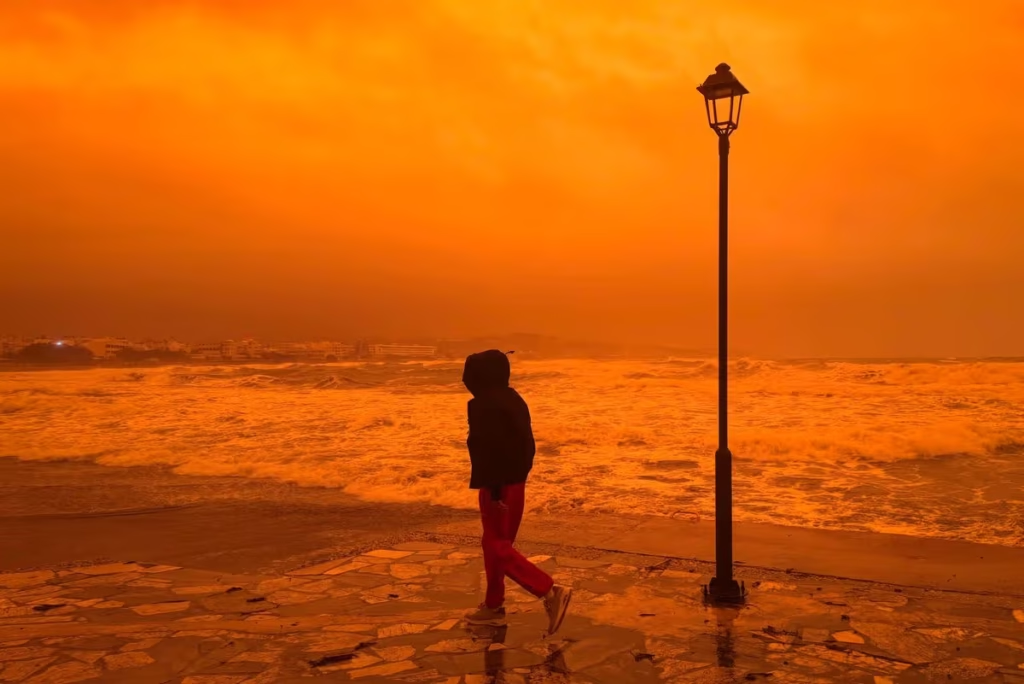
The phenomenon, while natural, has reached extreme levels in April 2026, with visibility in major cities like Heraklion dropping to under 1,000 meters, making it unsafe for aviation.
Flight Chaos and Diversions
The dust cloud has hit at the worst possible time—the start of the busy Easter holiday season.
- Grounded in Heraklion: Several flights scheduled to land at Nikos Kazantzakis Airport were unable to do so due to the “redout” conditions.
- Major Diversions: A British Airways flight from London was forced to divert to Corfu, while a SKY Express service from Brussels had to be rerouted to Athens.
- Ferry Cancellations: It’s not just the skies; ferry routes between Crete and the Greek mainland have also faced cancellations as high winds and poor visibility made maritime travel hazardous.
Storm Erminio’s Role
Meteorologists report that the intensity of this year’s dust event was amplified by Storm Erminio. The storm’s pressure system acted as a vacuum, sucking up fine sand particles from the North African desert and propelling them northward. Beyond the dust, the storm brought a tornado to the village of Pachia Ammos, which reportedly overturned a truck and uprooted centuries-old pine trees.
Why This Matters to Travelers
- Health Warnings: Authorities have issued a “Red Alert” for air quality. The PM10 (fine dust) concentration is at dangerous levels, and tourists are being urged to wear masks or remain indoors.
- Muddy Rain: For those on the ground, the dust has combined with light rain to create “mud rain,” coating cars, buildings, and outdoor cafes in a thick, reddish sludge.
- Easter Impact: With the dust expected to linger until at least Friday, April 3, thousands of travelers are facing delays in their holiday plans.
Quick Facts: Greece Dust Storm 2026
- Primary Island Affected: Crete (specifically Heraklion, Chania, and Rethymno).
- Visibility Drop: Reduced to ~1,000 meters in urban centers.
- Causal Factor: Strong southerly winds + Storm Erminio.
- Air Quality Status: Hazardous (PM10 particles at record highs).
- Duration: Expected to dissipate by the weekend of April 4.
Reader Questions
1. Is it safe to fly to Greece right now? Most airports in mainland Greece (like Athens) are operating normally, but Crete is seeing significant disruptions. Always check your flight status before heading to the airport.
2. How long will the orange sky last? Meteorologists predict the dust will begin to clear by Saturday, April 4, as wind directions shift, though a thin haze may remain for several days.
3. What should tourists do if caught in the dust? Health officials recommend staying indoors, using air conditioning with filters, and wearing an N95 mask if you must go outside, especially if you have asthma or respiratory issues.
4. Are other islands affected? Yes, Santorini and parts of the Peloponnese have also reported hazy orange skies and reduced air quality, though not as severe as Crete.
Final Thoughts
While the “Martian” skies make for incredible Instagram photos, the reality on the ground is a mix of logistical headaches and health risks. For those planning an Easter getaway to the Greek islands, the advice is simple: pack a mask, be patient with flight delays, and keep a close eye on the local weather alerts.
Follow bollywoodview.in for the latest global travel alerts, weather phenomena, and entertainment news!