


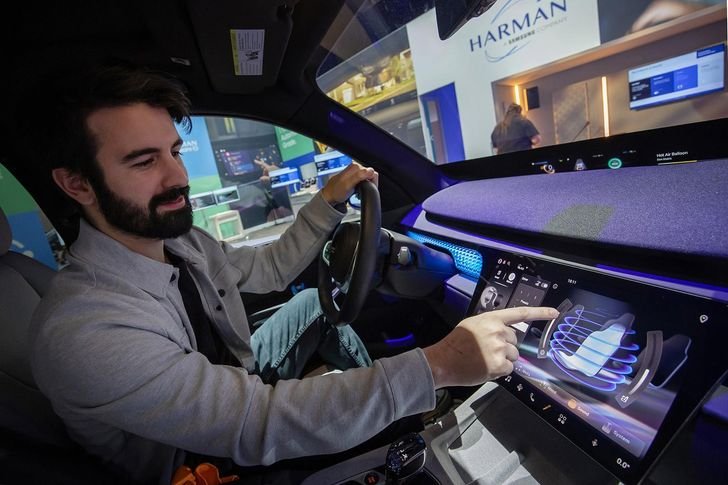
The global race to build self-driving cars is accelerating rapidly. Technology companies, automotive giants, and semiconductor manufacturers are investing billions into autonomous driving systems that promise safer roads, smarter transportation, and a massive new industry.
One of the latest moves in this race comes from Samsung Electronics, through its automotive technology subsidiary Harman International, which announced a $151 million investment in Hungary to develop autonomous driving technology.
This strategic investment signals Samsung’s growing ambition to become a major player in the automotive electronics and self-driving technology sector.
In this article, we will explore what Harman is, what technology is being developed, why Samsung is investing in this industry, the benefits and risks, employment opportunities, and the future profitability of autonomous vehicles.
Harman International Industries is a global technology company specializing in automotive electronics, connected car systems, audio technologies, and software platforms.
Samsung acquired Harman in 2017 for about $8 billion, making it one of Samsung’s largest acquisitions. Since then, Harman has become the core of Samsung’s automotive business.
Key Areas of Harman Technology
- Connected car platforms
- Digital cockpit systems
- Automotive infotainment systems
- Vehicle connectivity solutions
- Advanced driver assistance systems (ADAS)
- Autonomous driving technologies
Today Harman supplies technology to many global car manufacturers including Mercedes-Benz, BMW, Audi, and Volkswagen.
Originally known for high-quality audio brands like JBL, Harman Kardon, and AKG, the company has expanded into software-defined vehicles and intelligent mobility solutions.
Samsung’s $151 Million Investment in Hungary
According to reports, Harman will invest about €131 million (approximately $151 million) to expand research and production related to autonomous driving technology in Hungary.
Key Components of the Investment
The project includes:
1. Research and Development (Budapest)
Development of software and hardware for self-driving vehicle functions.
2. Autonomous Systems Development (Székesfehérvár)
Research on vehicle information management systems and autonomous driving solutions.
3. Manufacturing Upgrades (Pécs and Székesfehérvár)
Implementation of automation and digital manufacturing technologies.
The investment is expected to create high-skill research jobs and strengthen Europe’s automotive technology ecosystem.
Hungary has already become a major European hub for automotive suppliers and R&D.
Self-driving technology, also known as autonomous driving, allows vehicles to navigate roads without human intervention using advanced software and sensors.
Core Components
- Sensors
- LiDAR
- Radar
- Cameras
- Ultrasonic sensors
- Artificial Intelligence
- Machine learning
- Computer vision
- Real-time decision systems
- Vehicle computing systems
- High-performance processors
- Edge computing
- Connectivity
- 5G
- Vehicle-to-everything communication
- Software platform
- Autonomous driving algorithms
- Navigation systems
Together these technologies create a “digital brain” for vehicles.
Why Samsung Is Interested in Autonomous Driving
Samsung is not a traditional car manufacturer, but the company dominates many technologies needed in future cars.
Strategic Reasons
1. Future Automotive Market
The automotive electronics industry is expected to grow rapidly as vehicles become more digital and software-driven.
2. Semiconductor Demand
Autonomous vehicles require powerful chips and memory — areas where Samsung is already a global leader.
3. Connected Ecosystem
Samsung wants vehicles to integrate with:
- Smartphones
- Smart homes
- AI assistants
- Cloud platforms
4. Partnerships with Automakers
Samsung is strengthening collaboration with companies like Mercedes-Benz for next-generation vehicle systems.
Benefits of Self-Driving Technology
1. Road Safety
Most accidents are caused by human error. Autonomous driving systems can reduce accidents significantly.
2. Efficient Transportation
Smart vehicles can optimize traffic and reduce congestion.
3. Mobility for Everyone
Self-driving cars can help:
- elderly people
- disabled individuals
- people without driving licenses
4. Logistics Revolution
Autonomous trucks could transform supply chains and delivery systems.
5. Environmental Benefits
Smart driving systems can reduce fuel consumption and emissions.
Future Profit Potential of the Industry
Autonomous driving is expected to become one of the largest technology markets in the world.
Global Market Forecast
Estimated market value:
| Year | Market Size |
|---|---|
| 2025 | $60 billion |
| 2030 | $300 billion |
| 2040 | $1 trillion |
Major revenue streams include:
- autonomous vehicle software
- automotive chips
- mobility services
- robotaxis
- fleet management platforms
Companies like Tesla, Nvidia, Qualcomm, and Samsung are racing to dominate this ecosystem.
Countries Leading the Autonomous Driving Race
Several countries are investing heavily in autonomous vehicle technology.
United States
- Tesla
- Waymo (Google)
- Apple car project
China
- Baidu Apollo
- Huawei smart driving systems
Germany
- Mercedes-Benz
- BMW
- Volkswagen
South Korea
- Samsung
- Hyundai
Japan
- Toyota autonomous mobility
These countries are competing to lead the next generation of transportation.
Why Hungary Is Attractive for Tech Investment
Hungary has become a major destination for automotive investments.
Key Advantages
- Skilled engineering workforce
- Central location in Europe
- Lower operational costs
- Strong automotive supply chain
- Government incentives for technology companies
Major automakers already operating in Hungary include:
- Audi
- Mercedes-Benz
- BMW
This makes it an ideal location for Samsung’s automotive R&D expansion.
Pros and Cons of Autonomous Driving Technology
| Pros | Cons |
|---|---|
| Reduced road accidents | High development cost |
| Better traffic management | Cybersecurity risks |
| Mobility for elderly and disabled | Ethical decision issues |
| Lower fuel consumption | Regulatory challenges |
| Economic growth | Job displacement for drivers |
Despite the challenges, most experts believe autonomous vehicles will become mainstream within the next two decades.
Employment Opportunities in the Autonomous Vehicle Industry
The sector will create millions of new jobs worldwide.
High-Demand Roles
- AI engineers
- Robotics engineers
- automotive software developers
- sensor engineers
- cybersecurity specialists
- data scientists
- automotive system architects
Even traditional roles like mechanics and manufacturing technicians will evolve to support smart vehicles.
When Will Self-Driving Cars Become Common?
Autonomous vehicles are being introduced in phases.
Timeline
2025-2030
- Advanced driver assistance systems
- limited autonomous driving
2030-2035
- widespread robotaxis
- autonomous logistics
2035-2045
- fully autonomous personal vehicles
Regulation, infrastructure, and safety testing will determine the speed of adoption.
Frequently Asked Questions (FAQs)
1. What is Harman in Samsung?
Harman is Samsung’s automotive technology subsidiary specializing in connected car systems and electronics.
2. How much is Samsung investing in Hungary?
Samsung’s Harman division is investing approximately $151 million in autonomous driving technology development.
3. Why did Samsung buy Harman?
Samsung acquired Harman to enter the automotive electronics market and develop connected car technologies.
4. What is autonomous driving technology?
It is technology that allows vehicles to drive without human control using sensors, AI, and software.
5. Which companies lead self-driving technology?
Tesla, Waymo, Nvidia, Qualcomm, Apple, and Samsung are among the leaders.
6. Why is Hungary important for automotive tech?
Hungary has a strong automotive manufacturing ecosystem and skilled workforce.
7. Will autonomous cars replace drivers?
Some driving jobs may disappear, but many new technology jobs will emerge.
8. Are self-driving cars safe?
They have potential to reduce accidents but require extensive testing and regulation.
9. When will autonomous cars become mainstream?
Experts expect widespread adoption between 2030 and 2040.
10. What industries will benefit from autonomous vehicles?
Logistics, transportation, smart cities, automotive manufacturing, and AI technology.
11. What is ADAS?
Advanced Driver Assistance Systems help drivers with safety features like lane assist and automatic braking.
12. What role does AI play in self-driving cars?
AI processes sensor data and makes real-time driving decisions.
13. What sensors do autonomous cars use?
LiDAR, radar, cameras, and ultrasonic sensors.
14. Why is Samsung expanding in automotive electronics?
The automotive sector is becoming a major technology market.
15. How big could the autonomous vehicle market become?
Some forecasts estimate a $1 trillion market by 2040.
16. Which automaker partners with Samsung?
Samsung is strengthening cooperation with companies like Mercedes-Benz.
17. Will autonomous cars reduce traffic?
Smart traffic coordination could significantly reduce congestion.
18. Are governments supporting autonomous technology?
Many governments are investing in smart mobility and regulation frameworks.
19. How does 5G help self-driving cars?
It enables fast communication between vehicles and infrastructure.
20. What is the biggest challenge for autonomous cars?
Safety validation, regulations, and cybersecurity remain key challenges.
Final Thoughts
Samsung’s $151 million investment through Harman in Hungary is more than just a regional expansion—it represents a strategic step toward dominating the future automotive technology ecosystem.
As cars evolve into software-driven smart machines, technology companies like Samsung are becoming just as important as traditional automakers.
Autonomous vehicles could transform transportation, logistics, urban planning, and even the global economy. The companies that build the technology behind these vehicles will likely control one of the most valuable industries of the 21st century.
Samsung’s move shows that the race for autonomous mobility is only just beginning.
Why Samsung Is Investing Heavily in Semiconductor Chips: The Future of the Global Semiconductor Industry
Semiconductors are the foundation of modern technology. From smartphones and laptops to cars, satellites, artificial intelligence, and even washing machines, almost every electronic device depends on semiconductor chips.
Companies like Samsung Electronics, TSMC, and Intel are investing hundreds of billions of dollars to dominate this industry.
Samsung’s interest in semiconductors is not surprising because chips are becoming the “oil of the digital economy.”
This article explains what semiconductors are, why Samsung is investing heavily, which countries dominate the industry, and what role countries like India, China, Japan, and South Korea play.
A semiconductor is a material that can conduct electricity under certain conditions but not others.
The most commonly used semiconductor material is silicon, which is extracted from sand.
Using advanced manufacturing techniques, engineers create microchips (integrated circuits) on silicon wafers. These chips contain billions of tiny electronic switches called transistors.
Role of Semiconductor Chips
Semiconductors control the processing, storage, and communication of data in electronic devices.
They are used in:
- Smartphones
- Computers
- Electric vehicles
- Artificial intelligence systems
- Medical equipment
- satellites
- military systems
- smart appliances
Without semiconductor chips, modern technology simply cannot function.
Samsung Electronics is already one of the world’s largest semiconductor manufacturers.
Samsung’s business is divided into multiple technology sectors, but semiconductors generate a major portion of its profits.
Key Reasons Samsung Is Investing in Chips
1. Massive Global Demand
The world needs more chips every year as technology expands into:
- electric cars
- AI computing
- cloud servers
- robotics
- smart homes
2. Strategic Global Power
Semiconductors have become a geopolitical asset. Countries view chip manufacturing as critical for economic and national security.
3. Control Over Supply Chains
Samsung manufactures chips used in its own devices like smartphones, TVs, and appliances.
4. AI and Future Technology
Artificial intelligence and high-performance computing require advanced semiconductor chips.
Because of this, Samsung plans to invest over $200 billion in semiconductor manufacturing facilities over the next decade.
Countries That Manufacture Semiconductors
Semiconductor manufacturing is extremely complex and expensive. Only a few countries dominate the industry.
Top Semiconductor Manufacturing Countries
| Rank | Country | Key Companies |
|---|---|---|
| 1 | Taiwan | TSMC |
| 2 | South Korea | Samsung |
| 3 | United States | Intel, Nvidia |
| 4 | Japan | Sony, Renesas |
| 5 | China | SMIC |
| 6 | Europe | ASML, Infineon |
Each country specializes in different parts of the semiconductor ecosystem.
Taiwan: The Global Semiconductor Leader
The most important chip manufacturer in the world is TSMC.
TSMC produces chips for companies such as:
- Apple
- Nvidia
- AMD
- Qualcomm
TSMC controls over 50% of global semiconductor manufacturing.
This is why Taiwan has become extremely important in global geopolitics.
South Korea’s Role in Semiconductors
South Korea is home to two major semiconductor companies:
- Samsung Electronics
- SK Hynix
South Korea is the largest producer of memory chips, including:
- DRAM memory
- NAND flash storage
These chips are essential for:
- smartphones
- servers
- laptops
- data centers
Samsung competes directly with TSMC in advanced chip manufacturing.
India’s Role in the Semiconductor Industry
India is still in the early stages of semiconductor manufacturing but is rapidly expanding.
The Indian government launched the $10 billion semiconductor mission to attract chip manufacturers.
Several projects are underway including partnerships with global companies.
India’s Strengths
India already has strong capabilities in:
- chip design
- software development
- engineering talent
Many semiconductor companies operate design centers in India.
Companies like Intel, Qualcomm, and AMD employ thousands of engineers in India.
In the future, India may become an important design and manufacturing hub.
Future of the Semiconductor Industry
The semiconductor industry is expected to grow dramatically in the coming decades.
Global Semiconductor Market Forecast
| Year | Market Value |
|---|---|
| 2024 | $600 billion |
| 2030 | $1 trillion |
| 2040 | $2 trillion |
Growth will come from technologies such as:
- Artificial intelligence
- autonomous vehicles
- robotics
- 5G networks
- quantum computing
- smart cities
Semiconductors will power nearly every future innovation.
Why Semiconductors Are Strategically Important
Semiconductors have become critical to national security and economic power.
Countries that control chip manufacturing can influence:
- technology supply chains
- defense systems
- global electronics markets
This is why the semiconductor industry is often called the “new geopolitical battlefield.”
Governments worldwide are investing billions to secure chip production.