


South Korea has officially declared a “three-year golden time” to dominate the world’s emerging Physical AI industry. As of March 23-25, 2026, the Ministry of Science and ICT (MSIT) unveiled a comprehensive “full-stack” strategy to embed intelligence directly into the country’s industrial backbone—specifically targeting manufacturing and agriculture.
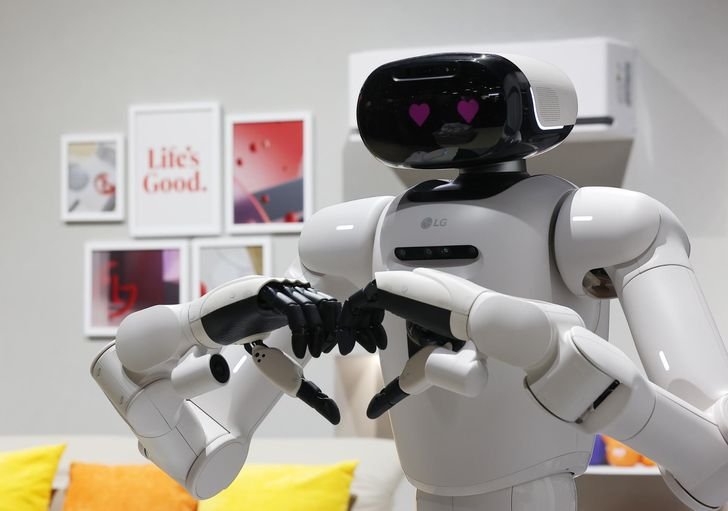
Here is the verified breakdown of Korea’s ambitious blueprint to move AI from digital screens to the physical world.
Korea’s ‘Full-Stack’ Physical AI Vision: Remaking Factories and Farms by 2030
Article Highlights
- The “Full-Stack” Goal: Korea aims to control the entire Physical AI value chain—from specialized On-Device AI Semiconductors (the brain) to Robot Foundation Models (the logic) and the physical hardware itself.
- Manufacturing Revolution: The government is investing over ₩700 Billion this year alone to build “Dark Factories” (fully unmanned, AI-managed production lines) in sectors like automobiles, shipbuilding, and precision manufacturing.
- Agricultural Autonomy: A joint initiative between MSIT and the Ministry of Agriculture aims to boost farm productivity by 30% by 2030 using AI-powered drones, autonomous tractors, and robotic livestock grading.
- The “KAIROS” Platform: Unveiled by KAIST on March 23, 2026, this is Korea’s first domestic integrated platform for unmanned factories, designed to replace expensive foreign automation software.
- Strategic Investment: Hyundai Motor Group and the government announced a massive ₩9 Trillion investment in the Saemangeum area to build a global hub for AI robotics and hydrogen energy.
What is “Physical AI”?
Unlike generative AI (like ChatGPT) which lives in the cloud, Physical AI refers to intelligence embedded into hardware that interacts with the real world. Think of it as a robot that doesn’t just follow a script but “understands” its environment to perform complex tasks like picking a ripe fruit or welding a ship hull with precision.
The Two-Pronged Strategy
1. The AI Factory (Manufacturing AX)
Korea is leveraging its status as the world’s 5th largest manufacturer to become a global “testbed.”
- 500 AI Factories: The goal is to establish 500 AI-powered factories by 2030.
- K-Chips: A ₩1 Trillion project is underway to develop domestic AI chips specifically for robots and drones, reducing dependence on foreign suppliers like NVIDIA.
- Humanoid Integration: The “M.AX Alliance” (including Samsung and Hyundai) is working to deploy humanoid robots in high-risk industrial tasks by 2027.
2. The Smart Farm (Agricultural AX)
To combat an aging rural population and labor shortages, Korea is turning its countryside into a high-tech zone.
- AI Price Platform: Launching in late 2026, an AI platform will provide real-time price comparisons and supply-demand forecasting for crops like kimchi cabbage.
- Smart APCs: The government plans to launch 55 Smart Agricultural Product Processing Centers by the end of 2026 to automate sorting and shipping.
- Telemedicine: AI kiosks and non-contact medical services will be deployed in 100 “Smart Rural Living Zones” to improve the quality of life for farmers.
FAQ (Frequently Asked Questions)
1. Why is Korea focusing on Physical AI? Korea has the world’s highest “robot density” (1,220 robots per 10,000 workers) but lacks its own foundational AI software. This strategy aims to bridge that gap so Korea isn’t just buying robots, but building the “brains” that run them.
2. What is the “KAIROS” platform? Developed by KAIST, KAIROS is an “all-in-one” operating system for unmanned factories. It allows small and medium businesses to automate their production without needing to buy software from giant foreign firms.
3. Will this lead to job losses? The government frames this as a solution to a shrinking workforce. With Korea’s birth rate at record lows, these technologies are intended to keep industries running as the human labor force decreases.
4. When will we see these AI-graded meats in stores? The government intends to raise the share of AI-graded beef and pork from roughly 20% to 70% by 2030, ensuring more consistent quality for consumers.
5. Is there a global partner for this? Yes. Korea recently signed a Strategic AI Cooperation Framework with the UAE to build 5GW AI data centers and develop Physical AI-based “Smart Ports” together.