


📌 South Korea Stock Market Crash 2026: Kospi Plunges 12% in Worst Selloff Ever Amid War & Oil Fears
📝 South Korea’s stock market experienced its biggest crash in history in March 2026 as the Kospi plunged over 12%, circuit breakers were triggered, tech stocks collapsed, and the won hit multi-year lows amid Middle East tensions and oil price shocks. Read full impact, causes, and expert outlook.
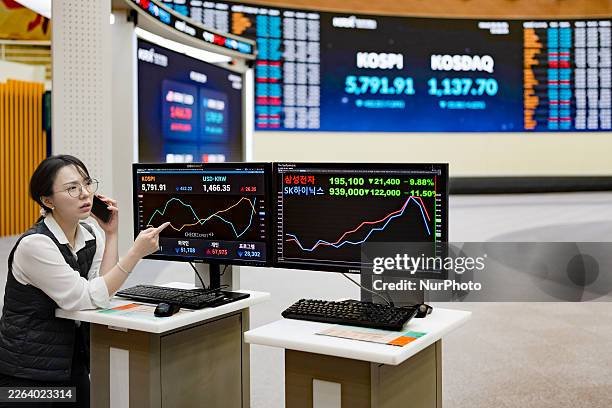
On March 4, 2026, South Korea’s stock market suffered an unprecedented downturn, marking one of the worst days in financial history for the Asian economy. The benchmark Kospi index plunged more than 12% in a single session, wiping out billions in investor wealth, triggering circuit breakers to temporarily halt trading, and sending shockwaves through global markets.
This broad sell-off followed an earlier steep drop on March 3, as geopolitical risks and soaring energy prices triggered panic selling across Korean equities.
📊 Market Plunge Highlights
- 📉 Kospi Index Crash: The benchmark index closed down 12.06%, its largest one-day decline on record.
- 🛑 Circuit Breakers Activated: Trading was temporarily halted on multiple occasions as losses hit predefined thresholds.
- 📉 Kosdaq Tumult: The secondary tech-heavy Kosdaq index also fell sharply, with declines over 13%.
- 💸 Massive Market Value Erosion: The combined sell-off wiped out hundreds of billions of dollars of market capitalisation.
- 💱 Won Weakness: The Korean won weakened past 17-year lows against the US dollar, as currency markets reflected rising risk aversion.
📉 Why the Crash Happened
🔥 Middle East War & Geopolitical Tensions
The main catalyst for the sell-off was fear of a prolonged Middle East conflict, particularly involving Iran, Israel, and the United States. Concerns that military escalation would disrupt oil supplies led investors to reassess global risk.
🛢️ Energy Price Surge
Rising oil prices — a direct consequence of geopolitical instability — increase input costs for import-dependent economies like South Korea. Since South Korea imports the majority of its energy needs, surging oil and gas prices put pressure on inflation forecasts and corporate profits, particularly in energy-intensive industries.
🆘 Heavy Selling in Tech Stocks
Major Korean tech giants — Samsung Electronics, SK Hynix, and Hyundai Motor — suffered double-digit declines, dragging down the overall market. These firms represent a significant share of the Kospi, so their sharp sell-off amplified overall losses.
🔄 Foreign Investor Outflows
Record levels of foreign capital exited the South Korean market, contributing to downward pressure. Many global funds sold local equities to reduce exposure to risk assets amid heightened global uncertainty.
📉 Technical Market Response
🛑 Circuit Breakers & Trading Halts
South Korea’s stock exchange triggered its circuit breakers — automatic safeguards that pause trading when prices fall too rapidly — for the first time since August 2024. These mechanisms aim to curb panic selling and provide breathing room for market participants.
📉 Volatility Spike
Volatility indexes for the Kospi surged to levels not seen since global financial stress periods, reflecting investor uncertainty and rapid repricing of risk.
🏦 Impact on Key Sectors
📱 Technology & Semiconductors
Samsung Electronics and SK Hynix — two pillars of the Korean economy — saw significant stock declines as semiconductor demand forecasts were reassessed. These companies had previously driven much of the market’s gains through rapid growth in memory chip demand.
🚗 Automotive & Industrials
Hyundai Motor also suffered sharp losses, as broader sell-offs affected cyclically sensitive sectors.
🏠 Retail & Institutional Reaction
Individual investors faced losses on leveraged positions, while institutional investors scrambled to rebalance portfolios. The crash exposed vulnerabilities related to high margin debt levels entering the sell-off.
🌍 Global Implications
South Korea’s market slump didn’t occur in isolation. Asian and global indices also slipped as oil prices surged and fears of supply disruption intensified. Markets in Japan, Taiwan, and China all experienced sell-offs, although none matched the Kospi’s scale.
Major global investors are now watching closely, as South Korea’s sell-off could signal broader risk-off sentiment if geopolitical tensions persist.
⚖️ Government & Policy Response
Officials from the Bank of Korea and financial regulators have stated that they are monitoring market conditions and are prepared to use stabilisation measures to curb volatility. Policy interventions could include liquidity support, currency measures, or adjusted trading rules to calm markets.
❓ Frequently Asked Questions (FAQ)
1. How much did the Kospi index fall?
The Kospi plunged more than 12% in one day, marking its worst drop on record.
2. What triggered the crash?
Geopolitical tensions in the Middle East and fears of rising oil prices triggered panic selling.
3. Were circuit breakers triggered?
Yes — trading was halted temporarily as losses exceeded automatic thresholds.
4. Which stocks were hit hardest?
Major exporters and tech giants like Samsung Electronics, SK Hynix, and Hyundai Motor saw significant declines.
5. How did the Korean currency react?
The Korean won weakened sharply, reaching multi-year lows against the US dollar.
6. Does the crash affect global markets?
Yes — Asian indices fell in sympathy, and global energy and tech markets showed increased volatility.
7. Is this the worst crash in history?
In terms of daily percentage drop, this is among the largest ever recorded for the South Korean market.
8. What can investors do now?
Experts recommend risk management, diversification, and staying informed about geopolitical developments.
9. Are markets likely to recover soon?
Recovery will depend on the de-escalation of geopolitical tensions and stabilisation of global energy prices.
10. How long might volatility last?
Volatility could persist as long as geopolitical uncertainty and oil price shocks remain elevated.
📌 Final Summary
South Korea’s stock market crash in 2026 — driven by Middle East war fears, rising oil prices, heavy tech stock losses, and massive sell-offs — has marked one of the most dramatic one-day drops in its history. Circuit breakers, currency weakness, and foreign investor outflows reflect broader financial stress. Policymakers are watching closely to prevent further deterioration, but the global ripple effects highlight how interconnected today’s financial markets have become.
Pingback: South Korea’s Flying Taxi Revolution: How the New Goyang Vertiport Could Transform Urban Travel