


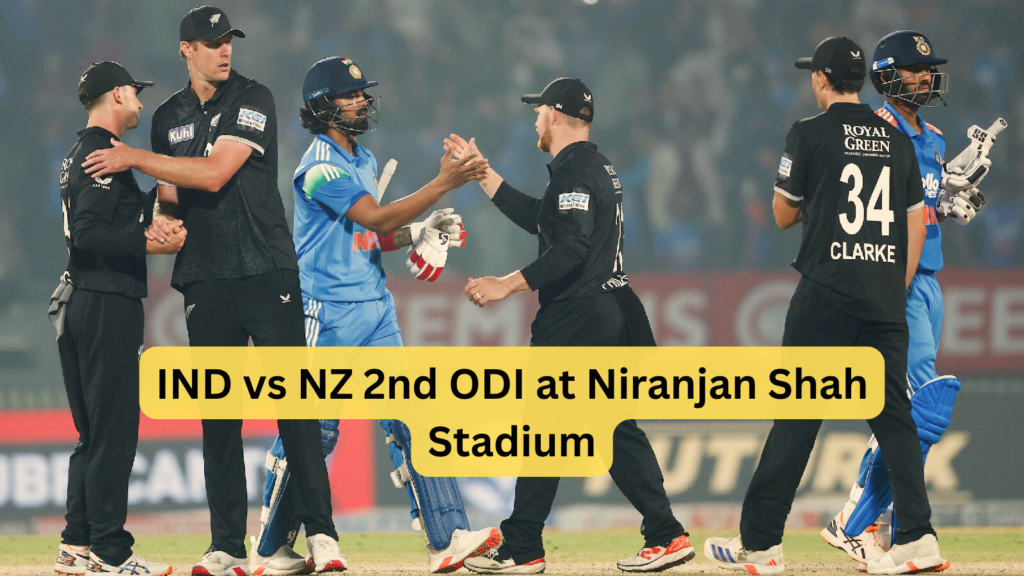
As India and New Zealand gear up for the 2nd ODI of their three-match series at the Niranjan Shah Stadium in Rajkot, fans and fantasy players alike are already analysing conditions closely. With India leading the series 1-0 after a win in the first encounter, this clash could be crucial for setting the tone for the decider. Here’s a comprehensive and fresh pitch, weather, and toss strategy report to help you understand what to expect on match day.
🏟️ Pitch Report: Batting Paradise at Rajkot
The Niranjan Shah Stadium pitch is shaping up to be another batter-friendly surface, much like many modern ODI pitches in India. Here’s what the conditions suggest:
🔥 Batting Conditions
- The surface is predominantly flat and hard, offering true bounce that encourages stroke-play from the outset.
- High scoring games are common here — historical trends show that teams batting first have mostly crossed 300+ totals in ODIs at this venue.
- Because of the consistent nature of the wicket, powerplay overs often see quick runs, with openers able to take advantage of the hard, even surface.
🌀 Bowler Considerations
- Pace bowlers might find it tough to extract movement through the air, so their success will rely on variations — cutters, slower balls, and disciplined lines will be key.
- Spinners could get a bit more purchase later in the day as the pitch begins to slightly slow, especially in the middle overs.
- As the pitch ages later in the match, it sometimes becomes a tad less batter-friendly, which may help strategic bowling changes.
👉 Bottom line: This venue is traditionally a batter’s domain, and posting a big total should be the primary aim for teams batting first.
☀️ Weather Forecast: Ideal Conditions for a Full Game
Good news for cricket lovers — the weather in Rajkot looks near perfect for a full 50-over game:
🌤️ Match Day Outlook
- Clear skies and dry conditions are expected throughout the match, with no rain interruptions forecasted.
- Daytime temperatures should hover around 28–30°C, which is warm but typical for January in this region.
- As the sun sets, the mercury may drop to the low teens, creating a significant temperature swing that can lead to dew formation in the evening session.
🌙 Dew Factor
- Dew can make gripping the ball more difficult during the second innings, particularly if humidity rises after sunset — a factor that often influences fielding and bowling strategies at day-night fixtures.
👉 Prediction: Full match expected under clear skies with dew likely affecting bowlers later in the game.
🎯 Toss Strategy: What Should Captains Do?
With the pitch and weather insights in hand, what’s the smart move at the toss?
🏏 Advantages of Batting First
- Historically, every ODI played at this venue has been won by the team batting first, highlighting the scoreboard pressure advantage here.
- A big total puts the chasing side under pressure, especially on a track that slows down later.
🌙 Dew’s Influence — And the Counter Move
- Because dew can make bowling in the second innings trickier, some captains might still prefer to bowl first if they feel confident chasing.
- However, most strategists still lean toward batting first at this venue — especially if the captain believes his team can post a massive total and defend it.
👉 Toss Tip: Bat first to make the most of favourable batting conditions and put runs on the board — especially given Rajkot’s strong historical batting trends.
🧠 Quick Summary
Pitch: Flat, batting-friendly, high-scoring surface; bowlers need discipline and variations to make an impact.
Weather: Clear skies with sunny conditions; no rain interruption expected; dew possible in the second innings.
Toss Strategy: Prefer batting first to apply scoreboard pressure and avoid dew trouble later.
❓ FAQ – IND vs NZ 2nd ODI at Rajkot
Q: Is this pitch good for bowlers?
A: Not initially — it favours batters heavily, with bowlers needing cutters, slower balls, and precision to contain runs.
Q: Will weather affect the match?
A: Weather is expected to be clear with no rain, but dew after sunset may make bowling in the second innings harder.
Q: Should the captain bat first after winning the toss?
A: Yes — batting first is the favoured strategy at this venue based on historical data and current conditions.
Q: Is a 300+ score likely?
A: Very likely. Rajkot has seen several 300+ totals in past ODIs, and similar conditions suggest another high score is on the cards.