

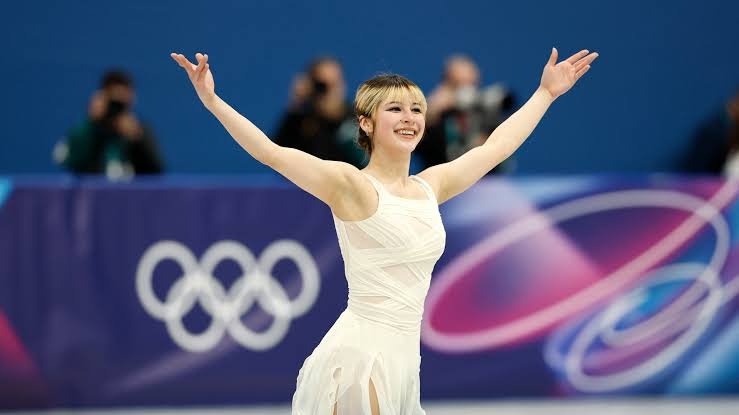
The Women’s Single Skating Free Skate at the 2026 Winter Olympics in Milano Cortina, Italy delivered one of the most dramatic and memorable finales of the figure skating program. Held at the Milano Ice Skating Arena, the event saw a blend of seasoned champions, rising stars, and historic moments that captivated audiences around the world.
🥇 Final Medal Winners – Women’s Singles (Free Skating)
| Position | Skater | Country | Notes |
|---|---|---|---|
| 🥇 Gold | Ami Nakai | 🇯🇵 Japan | Olympic Champion after stunning free skate |
| 🥈 Silver | Kaori Sakamoto | 🇯🇵 Japan | Strong and consistent performance |
| 🥉 Bronze | Alysa Liu | 🇺🇸 USA | Historic first individual Olympic medal |
Japan dominated the podium with two medals, while the United States’ Alysa Liu secured a strong Bronze, marking her first individual Olympic medal in women’s figure skating at the Winter Games.
🧠 Event Summary
The free skate is the second and final segment of Olympic women’s single skating, where skaters perform longer, more technically demanding routines compared with the short program. Routines typically include:
- Multiple triple jumps
- Combination jumps
- Spins
- Step sequences
- Artistic performance elements (choreography, expression)
Scoring is based on technical elements (jumps, spins, footwork) and program components (performance, interpretation, skating skills).
⭐ Highlight Performances
🥇 Ami Nakai – Gold Medal (Japan)
At just 17 years old, Ami Nakai put forth a breathtaking free skate performance that combined technical precision with artistic flair. Maintaining her lead from the short program, she landed clean triples and high-value combinations, finishing with a total score above 230 points — one of the highest in Olympic women’s figure skating history.
Her victory represents a breakthrough moment in her career and signals Japan’s continued strength in women’s figure skating at the Olympic level.
🥈 Kaori Sakamoto – Silver Medal (Japan)
Veteran skater Kaori Sakamoto, who already boasts world championship titles, produced a mature and consistent performance in the free skate. While narrowly missing the top spot, her silver medal adds to Japan’s impressive tally in figure skating at Milano Cortina.
🥉 Alysa Liu – Bronze Medal (USA)
American figure skater Alysa Liu delivered a strong free skate performance to clinch Bronze. After placing third in the short program, Liu carried her momentum into the final segment, showing resilience and powerful jumps. Her bronze marks a historic achievement — the first individual Olympic medal by a U.S. woman in figure skating in over two decades.
🏅 Other Notable Competitors
While Nakai, Sakamoto, and Liu captured the medals, several other skaters delivered noteworthy performances:
- Mone Chiba (Japan) – Finished high in the standings with strong technical elements.
- Adeliia Petrosian (AIN) – Performed daring quadruple jump attempts — a rare element in women’s skating — which could have boosted her score.
- Isabeau Levito (USA) – Another strong American presence in the later portion of the free skate field.
📅 When and Where It Happened
The women’s single skate free skate final took place on 19 February 2026 at the Milano Ice Skating Arena, concluding the figure skating events for these Olympics.
❓ Frequently Asked Questions (FAQs)
Q1: What exactly is the “free skate” in figure skating?
A: The free skate is the final, longer segment of competition where skaters perform their main routine with jumps, spins, and artistic choreography, judged on both technical difficulty and presentation quality.
Q2: How are figure skating medals decided?
A: The total score from the short program and free skate are combined. The highest total score wins. Technical elements and program components both play key roles in the scoring system.
Q3: Has the U.S. ever won a women’s Olympic gold in figure skating?
A: Yes, but the last American woman to win individual Olympic gold was Sarah Hughes in 2002. The U.S. had not medaled individually since, making Alysa Liu’s bronze particularly historic.
Q4: Who were the top contenders going into the free skate?
A: Ami Nakai and Kaori Sakamoto of Japan led after the short program, with Alysa Liu from the United States close behind. Many skaters, like Mone Chiba and Adeliia Petrosian, were in contention due to their strong technical skills.
Q5: What makes Ami Nakai’s gold medal significant?
A: At just 17, this gold medal marks a major milestone early in her career and reinforces Japan’s rising dominance in women’s figure skating on the Olympic stage.
🏁 Final Thoughts
The Women’s Single Skating Free Skate at the 2026 Winter Olympics was a perfect mix of youth, experience, technical skill, and emotional storytelling on ice. From Ami Nakai’s historic gold to Alysa Liu’s breakthrough medal, this event will be remembered as one of the standout moments in Milano Cortina 2026.
With high technical standards and a deeply competitive field, the future of women’s figure skating looks brighter than ever.